
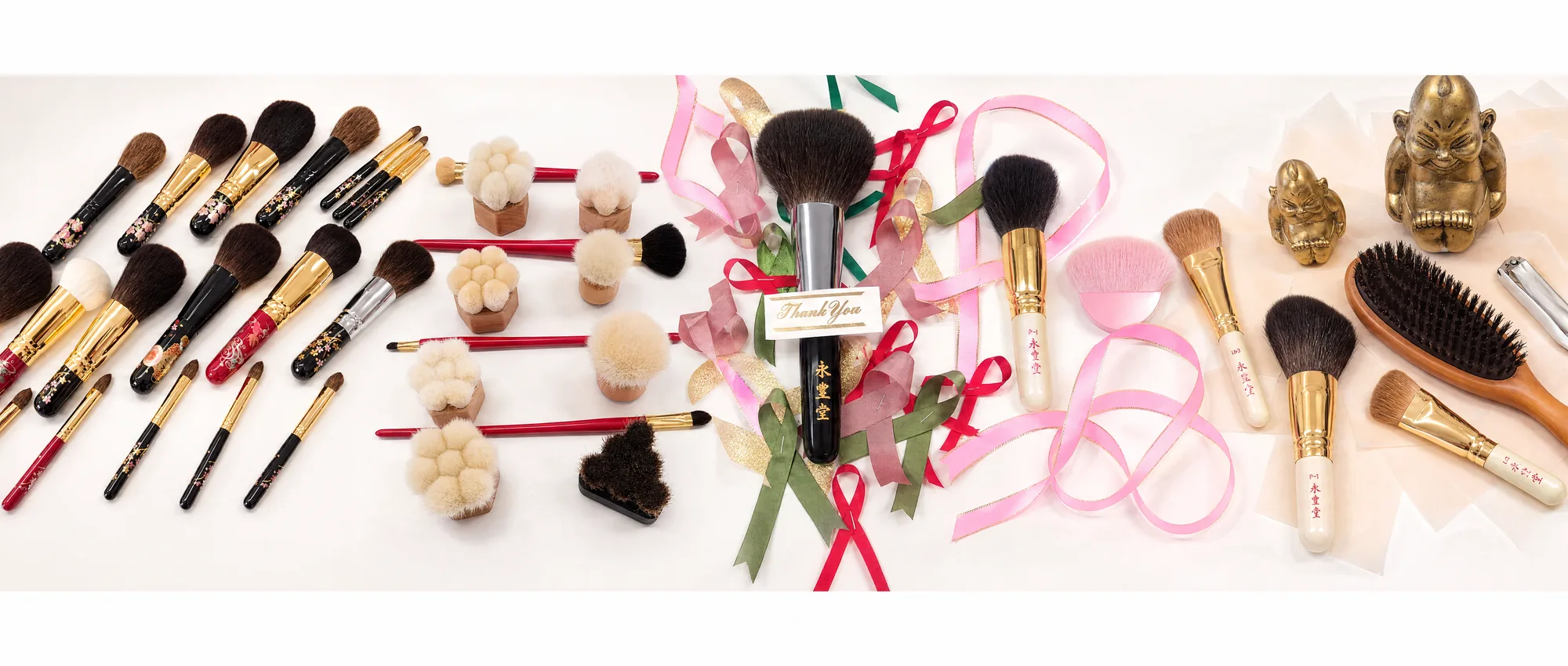
A handcrafted brush is made by hand-shaping the natural bristle tips so they stay soft and intact. Caring for them well protects exactly that — the delicate tips that make application feel effortless.
How to wash your brushes
- Wet only the bristles under lukewarm water, tip pointing down.
- Swirl into a little gentle shampoo or brush cleanser in your palm.
- Rinse until the water runs clear, keeping the ferrule (metal part) dry.
- Gently squeeze out water and reshape the bristles to their original form.
Drying — the step most people get wrong
Never dry brushes standing upright. Water seeps into the ferrule, dissolves the glue, and causes shedding. Instead, lay them flat with the bristles hanging slightly off the edge of a counter, or hang them bristle-down to dry fully.
Storage
- Store fully dry, away from direct sunlight and humidity.
- Use a brush roll for travel to protect the tips.
- Keep lacquered handles away from prolonged moisture.
How often to clean
Liquid/cream brushes: about weekly. Powder brushes: every 2–4 weeks. Spot-clean between uses to extend the time between deep washes.
Frequently asked questions
How often should you wash makeup brushes?
Liquid and cream brushes about once a week; powder brushes every two to four weeks. Spot-clean between uses.
How do you clean natural-hair brushes without damaging them?
Use lukewarm water and gentle cleanser on the bristles only, keep the ferrule dry, rinse until clear, reshape, and lay flat to dry.
Why should you not dry brushes upright?
Water seeps into the ferrule, loosens the glue, and causes shedding and a loose handle. Dry flat or bristle-down instead.
How should you store Japanese makeup brushes?
Store fully dry, flat or upright in a holder, away from sunlight and humidity. Use a brush roll for travel.
How long do handcrafted makeup brushes last?
With gentle care they can last many years — often a decade or more — because the hand-shaped bristle tips are preserved.